Friday, May 31, 2013

An elegantly visual citizen science concept: Monitor environmental and social change using iPhones, photo-stitching, and time lapse

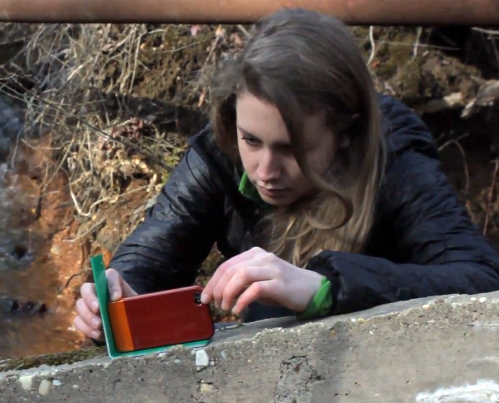
Sam Droege's idea has lots of applications to the type of work that ecologists, foresters, land managers, and environmental citizen groups do and provides an easy (and actually information dense) way of tracking long-term changes using volunteers using the smart phone that many carry in their pocket.

The concept is broad and is meant to be applicable to any location you would like to create uniform documentation of change over long or short periods of time without having to install a permanent camera.

The concept uses little more than a camera phone and a stout piece of bent steel to start.

Monitor Change
No date provided

Tuesday, May 21, 2013

The Many Faces of Success in Citizen Science

Citizen science seems to be in vogue now – it even goes by different names, like ‘public participation in scientific research’, ‘co-produced knowledge’, ‘collaborative research, and ‘democratized science’. A handful of scholars have tried to classify the different types while many others expound the myriad benefits this new type of science might bring.

However, I always got the feeling that even with concerted efforts to compare across efforts in citizen science, there was still some underlying disconnect between program expectations and what might qualify them as ‘successful’.

So I decided to interview program coordinators and compare what they had to say about recommendations for success to those in the published literature. Lo and behold, my suspicion was correct. Now, my work with Max Pfeffer, recently published in PLoS ONE, describes the many aspects of success and provides a new lens to look at the diversity of citizen science programs.

PLoS Blog
16 May 2013
C Copper

>>> FULL ARTICLE

Tuesday, May 7, 2013

What the citizen scientists found in shoreline survey


SO what did 357 people find in almost three years of searching the North East coastline? Lots, apparently.

The volunteers, dubbed “citizen scientists”, are part of a Newcastle University project to build up a baseline picture of the species which live in the inter-tidal shoreline of the region.

... The survey participants were given a long list of coastal marine species and asked to choose five which they would look for on regular trips to the coast.

A total of 134,000 records have been amassed so far of what was – and was not – found, covering more than 200 species.

The aims of the project are to produce an up-to-date record of marine intertidal species records along the coast which will feed into management strategies and provide the baseline for detecting environmental change, and to raise awareness of marine issues.

“The survey is providing good data of species against which we can measure changes in the future, such as how climate change may effect species,” said project officer Dr Heather Sugden, who is based at the university’s Dove Marine Laboratory in Cullercoats.

“Volunteers came forward mainly by word of mouth. People are really interested in, and care about, the coast in the North East and wanted to be involved.”

Finds have included a very rare, for the North East, colony of stalked jellyfish, with 190 discovered at Beadnell in Northumberland.

The Journal
27 Apr 2013
T Henderson
Thursday, May 2, 2013

Thank You!

Thank you for spreading the word about the bird mortality events occurring along the US' East coast and for asking your friends and colleagues to share their sightings of dead and sick birds to the Wildlife Health Event Reporter (WHER), www.wher.org.  You made a difference. We have seen an increase in reports to WHER as well as the addition of new members.  While these incidences are saddening, through the eyes of your reports to WHER, researchers like Drs. Ellis and Courchesne at SEANET/Tufts are gaining a better understanding of what is happening on the ground.

And hey! Non-US East-coasters, oh no - we are not leaving you out! WHER can accept observations from around the globe and your reports are just as important. Take a minute and consider the number of researchers who are working on wildlife disease issues and compare that to the number of people who during their day to day actives come across sick or dead wildlife. OK if you did the math, you would agree that comparably there are many more citizens.  Rallied together, that is an amazing corps who can be the 'boots on the ground', for researchers and other wildlife professionals who are on the alert for wildlife health events.

Your observations are valuable! Each report expands our baseline knowledge and understanding of disease ecology! 

Thanks from the WDIN Team!
Questions/problems with WHER? Email wher@wdin.org 

Wednesday, April 24, 2013

Butterflies get a hand from citizen scientists

Satterfield is recruiting “citizen scientists” — ordinary people with an interest in collecting scientific information — for her study monitoring monarch butterflies. In particular she’s looking at a monarch parasite called Ophryocystis elektroscirrha or Oe for short.

It’s a microscopic, single-celled organism first discovered in monarchs and queen butterflies in the 1960s. It’s harmless to humans and other animals, but it’s tough on these orange and black beauties.

Infected females transmit the parasite to the milkweed plants where they lay their eggs. When caterpillars emerge, they unwittingly eat the spores. Sometimes they have trouble developing properly. Sometimes they survive to adulthood with the infection, but are still weakened.

“We know they can’t fly as well, as fast or as far as healthy monarchs,” Satterfield said.

Savannah Morning News
21 Apr 2013
M Landers

Tuesday, April 9, 2013

Citizen scientists stretch their wings and research dollars

Seneca Kristjonsdottir, left, who studies bees, and Colorado master
gardener Tina Ligon look at different species of Colorado bees with
magnifying glasses before a "Bees' Needs" meeting last month
at the University of Colorado Museum of Natural History.
(Jamie Cotten, Special to The Denver Post)


The birds and the bees naturally excite interest. But people were jam-packed into the University of Colorado Museum of Natural History one night in late March — extra seats crammed at the last minute behind fossil-display cases — as two scientists recruited them for a research project on native bee species.

CU is asking citizen scientists to help gather data about the roughly 150 species of bees that nest locally in any little cavity or tunnel in woody material — dead trees, fallen logs, hollowed-out twigs.

The crowded hall was, forgive the expression, buzzing with anticipation, as Dr. Alexandra Rose, the university's citizen-scientist coordinator, said CU was "conning the public into doing our work for us."

The public didn't mind.

Denver Post
07 Apr 2013
E Draper


Friday, March 15, 2013

Marine Diversity Study Proves Value of Citizen Science

Citizen science surveys compare well with traditional scientific methods when it comes to monitoring species biodiversity -- according to new research from the University of East Anglia.

Research published today in the journal Methods in Ecology and Evolution shows that methods to record marine diversity used by amateurs returned results consistent with techniques favoured by peer-reviewed science.

The findings give weight to the growing phenomenon of citizen science, which sees data crowd-sourced from an army of avid twitchers, divers, walkers and other wildlife enthusiasts.

The field study compared methods used by 'citizen' SCUBA divers with those used by professional scientists, to measure the variety of fish species in three Caribbean sites.

...While the traditional scientific survey revealed sightings of 106 different types of fish, the volunteer technique detected greater marine diversity with a total of 137 in the same waters.

Science Daily - www.sciencedaily.com
12 Mar 2013


Journal Reference
Ben G. Holt et al. Comparing diversity data collected using a protocol designed for volunteers with results from a professional alternative. Methods in Ecology and Evolution, 2013; DOI: 10.1111/2041-210X.12031